Although getting backlinks makes sense for all types of websites, for online stores it can make a huge difference (strengthening the website, boosting product pages, and increasing sales). In this post, we’ll talk about link building for e-commerce and some strategies to exploit its full potential in your online store.
What is link building for e-commerce?
Link building for e-commerce refers to all strategies for generating external links (backlinks) to an e-commerce site aimed at increasing its domain authority to achieve better positioning on Google (and other search engines) and greater visibility in AI.
Why is link building important for e-commerce?
Link building for e-commerce is important because it improves the authority of the online store and its pages, thereby helping it rank higher with all the keywords it works with.
On the other hand, it also influences the opportunities that the online store has to rank in AI and capture potential customers directly from the responses of platforms such as ChatGPT or Gemini.
Keep in mind that every backlink your online store receives gives it some authority, and this authority is one of the decisive factors in SEO positioning.
For e-commerce, that authority means that you will be able to better position product and category pages that attract customers and increase your sales, so the benefit is much more direct than with other websites.
In addition, many online stores try to rank in saturated or highly competitive sectors. In such cases, the authority achieved through link building for e-commerce is not only useful, it can be indispensable for having real opportunities to rank.
Link building strategies that will give you better results
There are many link building strategies for e-commerce, but these are some of the most effective:
1. Strengthen your category pages
Category pages are among the most overlooked in online stores. Generally, SEO and SEM strategies focus on promoting products, special pages, or the store’s homepage itself.
However, category pages can rank very well on their own, attracting customers to complete listings of your products.
In addition, by getting these backlinks, you will not only strengthen the category, but the page will also distribute part of that authority to all the products linked from it, helping your product listings rank higher.
2. Look for mentions, not just backlinks
Although backlinks are the most sought-after when link building in e-commerce, mentions can also be very useful, especially for influencing your visibility with AI.
Understanding the value of mentions, don’t just focus on getting links, but also invest in getting well-positioned websites with sufficient authority to talk about your online store.
Above all, it is key that mentions of your website appear in relevant content, with keywords and topics that you want to be associated with your e-commerce site.
This way, you will send signals that will more closely link your business to its keywords and the type of queries that your potential customers might make in AI.
3. Boost your brand’s relevance
Brands are becoming increasingly important for search engines and AI. They are a differentiating factor that helps give any website reliability and prominence.
For an online store, a strong brand means not only more clicks and better organic positioning, but also more visits and customers from AI.
With link building, you can boost your brand in several ways:
- Including direct mentions of it in sponsored posts.
- Getting links with branded anchor text.
- Generating mentions from platforms such as Reddit, Quora, and Medium.
If you apply these points, you can boost your brand with link building and improve its online presence to make it more distinguishable to search engines and AI.
4. Request backlinks from your suppliers’ websites
Most online stores have suppliers, and these suppliers usually have their own websites.
Since your online store already has a business relationship with its suppliers, an easy way to get more links (and ensure they are quality backlinks) is to ask those suppliers to link to your website.
This will make your online store appear more trustworthy and also demonstrate its relevance by linking it to websites with similar themes.
Expert tip
If you are going to request links from your suppliers, make sure you get the most out of them.
Ask for dofollow links (so they can give authority to your online store) and also for them to have at least one branded anchor text.
This will give you more authority and strengthen your brand’s presence and visibility on AI, Google, and other search engines.

Laura García
SEO and Link Building Campaign Manager5. Generate organic links by collaborating with sites, influencers, and platforms in your industry
When link building for your e-commerce site, it’s not all about getting sponsored posts or buying SEO links. You can also set up collaborations to generate links organically.
While organically generated backlinks tend to take longer, they are a perfect complement to a paid link building strategy.
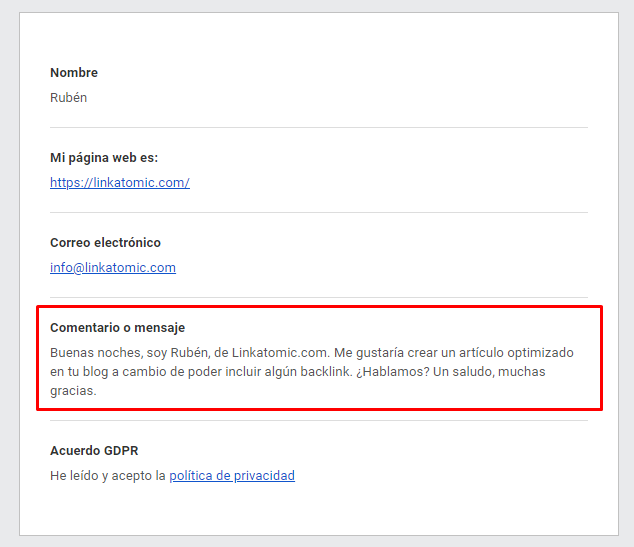
To obtain this type of backlink, you can collaborate with specialized websites, platforms in your sector, and influencers, either by offering some of your products for free or by guest posting in exchange for reviews of your store and links to your website.
The key to this strategy’s success is choosing the right websites and influencers to collaborate with. They should be related to your business and what you sell, and have a similar audience.
Ultimately, in link building for e-commerce, you also want to reach the right people (those who might be interested in buying from you).
And the more relevant the websites and influencers that link to you, review you, and make you visible are, the better your website will perform organically.
6. Harness the potential of your blog content
Although it may seem somewhat outdated, a well-crafted blog remains one of the most powerful assets of an online store.
When it comes to link building for e-commerce, you can use your blog as a magnet for organic backlinks and also as a source of content that you can reuse and repurpose for other platforms that can give your website visibility.
For example, a good blog post can be adapted to become an Instagram post, a Quora answer, or a Reddit or Medium post.
By doing so, you extend the usefulness of your content and strengthen the organic visibility of your online store.
And since that content would be on platforms that AI takes into account, you’ll have more opportunities to appear in ChatGPT responses and similar chatbots.
For this strategy to work, you must carefully adapt your content to each platform. Keep in mind that depending on the platform, certain formats will work better than others.
In addition, it is essential that you link back to your website, both to the homepage and to relevant category, product, and blog content pages.
7. Keep an eye on your competition
If you have an online store, you can count on your competitors investing in link building (at least those who understand its value for positioning and attracting organic customers).
The best thing you can do to stay ahead is to analyze your competition and understand what links they are investing in and how they are strengthening their authority. This will help you know in which direction to push your strategy to stay ahead.
Generally, this type of analysis requires tools such as Semrush or Ahrefs. However, there are alternatives. On platforms such as Linkatomic, you can add your website’s competitors for free and detect the backlinks they get.
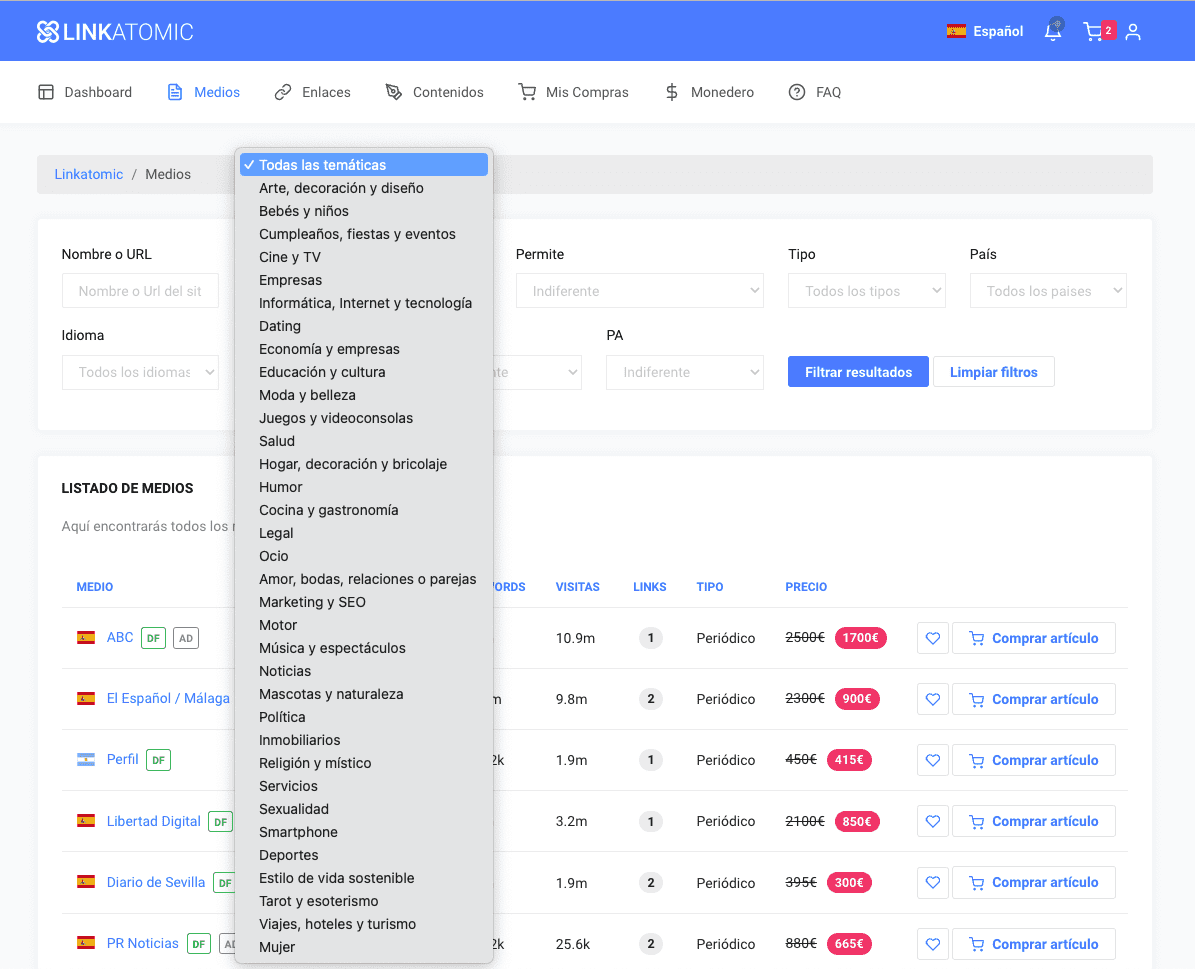
Analyzing your competitors with Linkatomic even shows you their anchor texts and the URLs from which the backlinks originate. Best of all, since Linkatomic is a link building platform, you can easily replicate those backlinks with it.
8. Make your business visible in directories
Business directories are another good source of backlinks, one that also strengthens the credibility of your business.
The process of registering your online store is usually simple and in most cases also free, so you just have to add your e-commerce details to these listings with a link to your site.
If you want both your online store information and the link to contribute to your positioning, make sure that all the information you add matches exactly with that in your business’s Google Business Profile (if your online store has one, of course).
It is also ideal for the directory links to be dofollow, since if they have the nofollow attribute, they are unlikely to boost your website’s authority, although everything counts.
9. Get links through affiliate programs
Affiliate programs are common in e-commerce, with giants like Amazon relying on this strategy to scale their revenue and boost their visibility.
Fortunately, you don’t have to be Amazon to take advantage of your own affiliate program. By launching your own, you could get recurring organic links to your site.
In addition to the links, which in themselves can greatly improve your website’s authority, you would channel more (and higher quality) traffic to your online store.
Not to mention, of course, that a good affiliate program can significantly increase the number of sales you get from your e-commerce site.
Tips for getting more out of link building for your e-commerce site
- Prioritize quality over quantity in link building for your store: when it comes to link building, quality is always preferable to quantity. You can get thousands of backlinks in a short time (both free and at very low prices), but if they are not of sufficient quality, they will not boost your website or help it rank. If you want your link building to yield results, you must go for quality links.
- Generate links at a regular pace: getting backlinks on a regular basis is key to maintaining visibility and digital presence, and constantly attracting the attention of both Google and AI. Generating links regularly also helps to make your link profile more natural.
- Take care of the naturalness of your link profile: your link profile is made up of all the backlinks and referring domains your website has, as well as aspects such as anchor texts, linked pages, and link attributes. To maintain the naturalness of your link profile (and prevent Google from thinking you are trying to manipulate its rankings), you need to make sure you vary your use of anchor texts, vary the pages of your e-commerce site that you link to, and don’t overuse dofollow links (having some links as nofollow will give everything a more organic appearance).
- Keep an eye on your competitors: analyze your competitors from time to time with tools such as Ahrefs or SE Ranking, or with the help of link building platforms such as Linkatomic. The idea is to find out what links they are getting and how much they are investing in link building so that you don’t fall behind and can work on your authority as much as your competitors.
- Don’t just focus on backlinks, get mentions: mentions will help strengthen the organic relevance of your website indirectly, and they will also help your site become more visible in AI (something that will become increasingly important for online stores).
- Monitor all your link building investments and evaluate progress: don’t invest blindly, track your entire strategy to assess how it influences your positioning and redouble your efforts on the type of backlinks that give you the best results. Make a note of the backlinks you generate, the content they come from, and the dates you got them. This will allow you to track all the work you do.
Expert tip
Link building can be an expensive strategy, especially for small businesses with tighter budgets.
If you want to ensure you’re making a good investment, review the websites you’ll be investing in to get backlinks and look at:
- The keywords they rank for.
- Their ranking trend.
- Their authority (measured with metrics such as DA and PA or Semrush’s Authority Score).
- Their theme (it should be related to your online store).
- And the ratio of inbound to outbound links (if a website has many more outbound links than inbound links, it may not be as beneficial).
By evaluating these factors, you will have a clearer idea of how beneficial a website’s backlink is for you.

Rubén Vázquez
CEO de LinkatomicLink building for e-commerce is one of the most powerful strategies you can apply if you have an online store and want it to rank well, get traffic, and attract customers from Google and AI.
Doing it right can be challenging, but the benefits are worth it and can make a difference in almost any industry.
¿Te ha gustado el artículo?
[Votos: 0 Nota: 0]