


What do you actually need to rank? In this post, we show you the 20 most important SEO ranking factors out there. If you want to make your business visible on Google (and in AI), you’ll want to know them and work on them as part of your organic ranking strategy.
Contents
Domain authority is one of the most crucial SEO ranking factors in any strategy. It’s nothing new, it has been important since the early days of Google.
Specifically, it’s a factor that depends on the number of backlinks and referring domains a site has.
Today, it even influences how well you rank in AI (meaning how likely Gemini or ChatGPT are to mention and link to your website).
Expert tip
Moz’s DA and PA are two of the most common, but you’ll also come across others like Ahrefs’ Domain Rating or Semrush’s Authority Score.
In general, they all serve the same purpose: helping you understand how authoritative a website is.
Take these metrics with a grain of salt, because they’re not based on Google’s direct data, they’re estimates made by each tool.
Use them as a reference number, while keeping in mind that they’re only estimates.

Laura García
Gestora de campañas de SEO y Link BuildingEach page has its own authority level, independent from the domain. That authority depends (mainly) on the backlinks the page receives.
Although page-level authority is rarely talked about, it’s actually a significant ranking factor.
The authority of your website’s pages is always compared against the authority of the pages that already rank on Google.
To rank for any keyword on Google, your page’s individual authority should be higher than that of the pages currently ranking.

This is the ranking factor that explains why some pages, even on very large websites, fail to rank for their target keywords.
So, you shouldn’t just focus on your domain’s overall authority, but also on the specific authority of every page on your site, especially if you’re trying to rank for very competitive keywords.
It’s not exactly a metric, but it directly influences the ranking of any website.
Subject authority is the type of relevance a website gains when it specializes in a topic.
For example, a website that consistently discusses copywriting and ranks for copywriting-related keywords will have more subject authority on that topic than a site that only dedicates one or two articles to it.
It’s not discussed as much as it should be, but it can often make the difference in a site’s ranking, especially for small websites or those in highly competitive sectors.
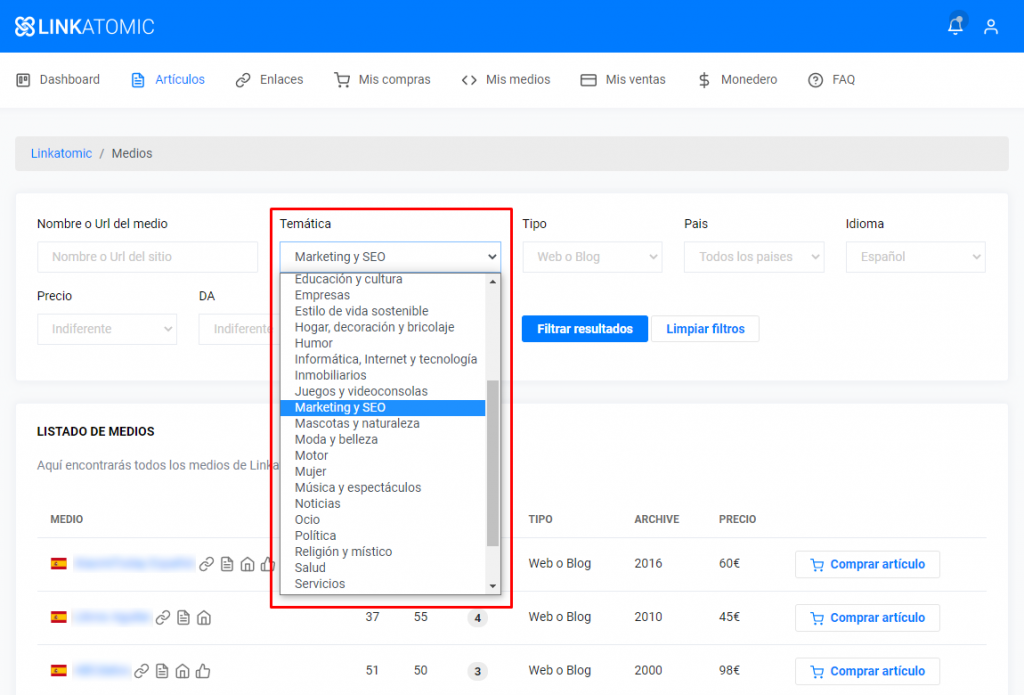
4. Internal linking
Internal linking is an SEO ranking factor that’s often overlooked, despite being so important.
Google takes into account the internal links that pages on the same site receive, and it also pays attention to the anchor text (the text where the link is placed) and whether it matches relevant keywords.
Each internal link passes what’s known as link juice, a portion of the authority from the page that’s linking out.
So, for example, if one page links to two others, those two pages receive a share of the authority from the page that’s linking to them.
That’s why the more internal links a post or page receives, the better it tends to rank.
And beyond SEO, well-executed internal linking is great for user experience and helps guide your users where you want them to go, which is always a plus.
5. Content quality
Content quality plays an essential role in your website’s rankings.
This factor is often misunderstood, it’s not that Google judges content quality the way a human would, nor does it “understand” it in the same way.
What Google does pay attention to is the content’s ability to give the user what they’re looking for.
When the content matches the user’s search intent and satisfies their query, then it’s considered high-quality content.
And if that content is also well crafted and optimized, aligned with semantic signals and relevant keywords, it has a clear advantage when it comes to ranking.
6. Domain history
Has it ranked well? Has it ever been penalized? Was the domain previously used for sensitive or questionable topics? These are the kinds of aspects that define a domain’s history.
More than the domain’s age itself, what matters is its history, because this shapes how Google values the site and its chances of ranking.
It’s a very relevant factor, both for better and for worse.
If a domain has a good history, it can recover and rank much faster than a relatively unknown domain or one with a poor track record.
7. Content match with search intent
Search intent is the reason why a user performs a query on Google.
Google will always rank higher the content that gives users what they’re looking for. That’s why alignment between your content and the search intent can be considered a ranking factor.
In fact, as a ranking factor, this alignment is one of the most decisive, because Google always tries to provide the ideal answer to its users.
For example, if you search for a business near your location, Google will prioritize results that match your query. In other words, local content from nearby businesses will have an advantage.
On the other hand, if a user is looking for a specific product to buy, the page that offers that product will rank higher, not a page that is merely informational.
8. Keyword optimization
Using keywords on your website is a major ranking factor because it helps Google understand which queries your page is relevant for.
Keyword optimization is an essential part of any SEO strategy and includes aspects such as:
- Including keywords in the meta titles of each page on your site.
- Adding keywords to the URL slugs of your pages.
- Using keywords in your H1, H2, and H3 headings.
- And adding keywords and related terms throughout each page’s content.
When it comes to demonstrating the relevance of your content, using keywords properly is absolutely critical.
9. Content structure
Google doesn’t understand your content the same way a human would, which is why its structure is so important, to the point that it becomes a ranking factor.
You define your content’s structure by using HTML headings correctly. These headings show Google how the sections of your content are divided, what topics you cover, and what you focus on.
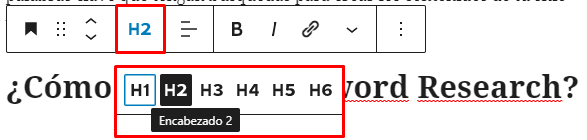
Headings are also more prominent and noticeable to Google, so they’re a key element to optimize if you want to rank well.
10. Semantic richness of the content
If you know how to write for SEO, you’ve probably heard more than once about semantic richness.
Content optimization goes beyond simply adding keywords, it also involves mentioning specific related terms.
In this sense, the semantic richness of a piece of content is something you build by including words or terms related to the topic and the keyword you want to rank for.
For example, a post about link building could include terms like “backlinks,” “referring domains,” “domain authority,” or “link profile” to increase its semantic richness.
The richer a piece of content is semantically, the clearer it becomes to Google what it’s about, and the better it tends to rank.
11. Content length
People often say that content needs to have a certain word count to rank. And yes, content length is a ranking factor, but not in the way you might think.
While a longer piece of content gives you more opportunities to include keywords and answer your users’ questions, it’s not the length itself that influences rankings.
Content length is a ranking factor because, when it aligns with what the user is searching for, it improves the content’s ability to rank.
So it’s not about creating posts or pages with more than 1,000 words, it’s about giving the user what they’re looking for.
For users searching for a quick answer, short and to-the-point content will rank better.
But for users making more detailed or complex queries, longer content may be the best fit.
12. User experience
User experience can also be considered a ranking factor.
A website that offers a positive experience, is easy to navigate and understand, and satisfies the user will always have a better chance of ranking because it’s more user-friendly.
After all, Google aims to show the optimal answers for every search, and part of that involves taking into account pages that not only offer the best answers, but also provide an experience that allows users to actually benefit from them.
13. Core Web Vitals
Core Web Vitals are a set of metrics that measure everything from loading speed to the overall performance of a website.
They help gauge the quality of the experience users have when visiting a site (beyond subjective aspects like design).
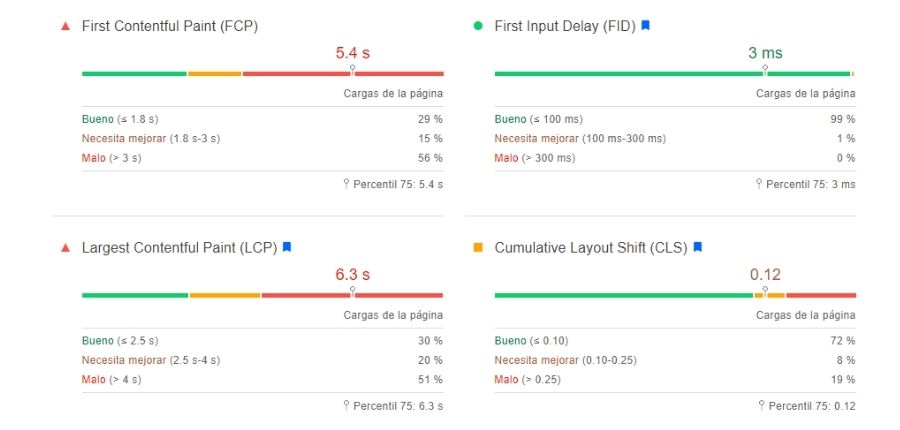
No user wants to visit a page that takes 2 minutes to load or never loads properly.
That’s why Google uses Core Web Vitals as a “tie-breaker” ranking factor. Basically, it gives a slight advantage in the rankings to sites with better Core Web Vitals.
Social signals are all the interactions that web pages and their content receive on social media.
They’re an indirect (but noticeable) ranking factor, even more so now, because social signals also influence AI rankings.
All social signals help give your website more relevance and organic visibility. This, in turn, helps Google take your content into account, which can benefit its rankings.
Additionally, the traffic you can drive to your site through strong social media reach is a major advantage in itself.
15. Website language
The language of your website is a critical ranking factor because Google takes it into account before ranking any page.
For Spanish-speaking users, it will prefer websites in Spanish; for English-speaking users, websites in English, and so on.
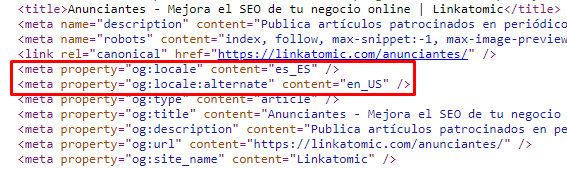
This aligns with Google’s goal of providing effective answers. Sending a user to a site written in a language they don’t understand would be the opposite of a good response.
16. Local citations
A local citation refers to the mention of a business’s name, address, and phone number online. They are a powerful local ranking factor, but only for local searches.
Every time a local directory or similar website mentions a business with a physical presence, it gives that business a citation, which Google considers a positive reference.
Local citations help increase the trustworthiness of any local business, boost its visibility, and improve its ranking potential.
Just like backlinks, Google sees citations as votes of confidence for the business being mentioned, so it will tend to rank it higher.
Given their importance, it’s no surprise that most top local SEO tools help you monitor the citations your business receives.
17. User location
User location is another ranking factor, although in this case, it’s something no website can control.
Google takes into account the location from which the search is performed to offer results that are relevant not only in terms of intent but also geographically.
If your website isn’t relevant to the user’s location, your chances of ranking decrease.
18. Page text formatting
The formatting of the text on each page is an SEO ranking factor because it’s not just visual, formats like bold, italics, underline, and lists have specific HTML attributes.
Google takes these HTML attributes into account and may pay more attention or give more value to certain content depending on its formatting (similar to what happens with headings).
That means using text formatting properly can improve any content’s chances of ranking.
19. User search history
Just like location, a user’s search history affects the results Google shows and what it ranks higher.
If your content aligns with what Google considers relevant based on the user’s search history, you have a much better chance of ranking highly.
This is another SEO ranking factor you can’t directly control, but it noticeably influences results.
20. Sitewide links to your website
Sitewide links are the type of links that appear on every page of a website because of their placement (for example, links in the footer).

Like any backlink (that isn’t nofollow), they contribute to the authority of the site receiving the link, so they are a ranking factor.
However, the importance of these links will depend on their attributes, characteristics, and the quality of the linking website.
Expert tip
Sitewide links follow, to some degree, the same rules as any other backlink.
For them to improve your rankings, they must be high-quality backlinks. Otherwise, they’ll just be another link Google ignores.
Laura García
SEO and Link Building Campaign ManagerThere are hundreds of ranking factors, but the 20 we’ve shown you here are some of the most influential for your rankings.
So if you want a solid SEO strategy that ranks and brings you traffic, you’ll want to pay attention to these factors and optimize them as much as possible.
¿Te ha gustado el artículo?
[Votos: 0 Nota: 0]